New Opportunities, New Connections

June 16, 2020

Written by Zander Evans and Amanda Mahaffey

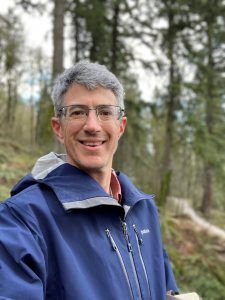
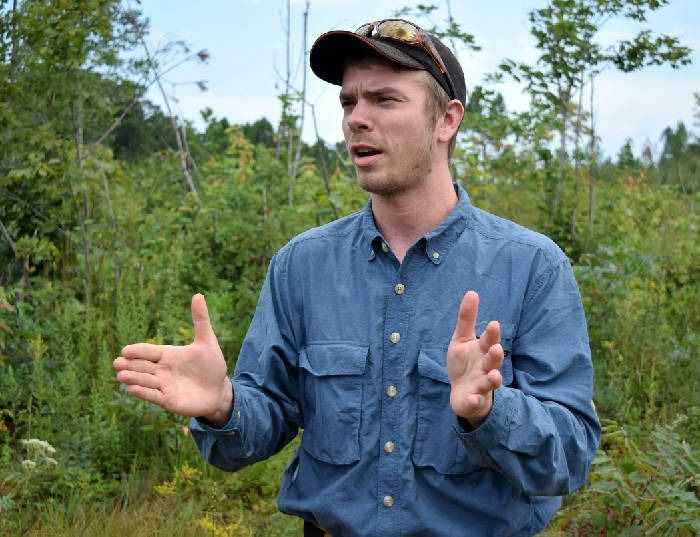
As many of you have heard, Nick Biemiller has transitioned from the Forest Stewards Guild to the Ruffed Grouse Society / American Woodcock Society (RGS/AWS). We are fortunate to have a great staff at the Forest Stewards Guild, and while we would like to keep all our energetic, enthusiastic, and effective staff, change is inevitable. In fact, supporting staff in new endeavors has helped the Guild grow. Nick’s move, for example, opens up a golden opportunity to build new partnerships.

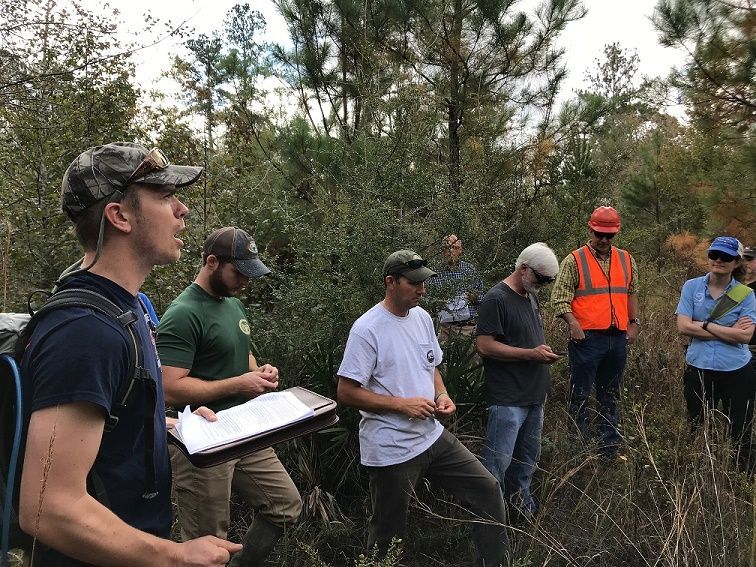
Nick may no longer be Guild staff, but he is a life-long Guild member. Guild members and partner agencies and organizations know Nick for his passion for ecological forestry, his desire to connect with people across the Southeast landscape, and his drive to make science-based management happen on the ground. Nick has grown a diverse and complex southeast program that touches on ecological forestry in bottomland hardwoods, shortleaf pine restoration, community forestry in western North Carolina, education about appropriate management for mesophytic coves sites, and carbon-friendly forestry in the southern Appalachians. He has also strengthened ties with new and long-standing Guild members and engaged them more deeply in collaborations centered on Guild-style forestry.

I’ll miss working with Nick on a daily basis, but I’m excited by new collaborations with RGS. In his new position as the Forest Conservation Director at RGS/AWS, Nick will lead their forest wildlife conservation efforts in the southern Appalachians. As Ben Jones, RGS/AWS President & CEO said, “Ruffed grouse are hanging on by a thread and we have to put our best foot forward. With his deep understanding of forestry and wildlife conservation, Nick is the right person for the job.” Nick’s job at RGS/AWS is to support working forests in the southern Appalachians and encourage science-based forest management that improves habitat for ruffed grouse, woodcock, and all forest wildlife. This goal aligns well with the Guild’s mission, so it is no surprise that we’ve already been talking about ways RGS/AWS and the Guild can support each other.

Next month, we’ll introduce ATL readers to the Guild’s new Southeast Manager, who will work with Dakota Wagner, our Southeast Coordinator, to continue the projects Nick started. Like any Guild-style forester, Nick has left the “forest” better than he found it, with lots of options for the next forester to explore. Thank you, Nick Biemiller, for all your work on behalf of the Forest Stewards Guild!


Recent Posts

By Daisy Smith May 14, 2026
Written by Zander Evans
By Daisy Smith May 14, 2026
Written by Zander Evans
May 14, 2026
A science inspired art show in Taos, NM Written by Cody Dems
By Aidan Juhl April 16, 2026
Written by Colleen Robinson
April 14, 2026
Written by Shannon Maes
April 14, 2026
In September 2025, the Guild launched a three-person Forest Stewards Apprenticeship (FSA) crew to work with the Penobscot Nation’s Department of Natural Resources (PN DNR). Over the course of their six-month season, apprentices Agenor Duhon, Gabe Stewart, and Jacob Baker shared a season of learning, collaboration, and hands-on stewardship of Penobscot Tribal lands.
April 14, 2026
This week, I stepped into the role of crew leader. We worked a full 40-hour week, splitting our time between Clifton Farms and a prescribed burn operation. On the first day in the field, we completed hack-and-squirt treatments on trees that had been marked the previous week. For the remainder of the week, we focused on marking trees for future hack-and-squirt work, maintaining a steady pace and ensuring accuracy in our selections.
April 7, 2026
As Guild members, our practice is fundamentally grounded in field observation. We know intuitively that forests are dynamic, living communities. Yet, for decades, the high-level systems used to value our work, specifically the carbon accounting ledgers tied to international frameworks like the Paris Agreement, have treated forests as static, quantifiable blocks of land. In a recent commentary published in One Earth, I argue that these legacy measurement, reporting, and verification (MRV) frameworks are failing. Ledger accounting relies on crude land-use delineations and outdated technology, effectively penalizing the natural, seasonal flux of the ecosystems we manage every day. By forcing landscapes into rigid “forest” versus “non-forest” binaries, such legacy systems miss the complex reality on the ground. But a major shift is underway.
March 18, 2026
Women have always been a part of forestry. Historically, women often helped guide family decisions about when to cut, which trees to save, and how best to steward their land for the next generation. Historical accounts from the Southern Appalachians describe women’s roles in decisions about timber harvesting and prioritizing long-term forest health. These often-uncredited contributions are even reflected in Aldo Leopold’s A Sand County Almanac (1949), in which describes his stewardship philosophy informed not only by his professional experience, but by shared responsibility, where the perspectives of his wife and daughters played an important role.
March 18, 2026
Although rural regions often host the highest concentrations of public and private forest land, they typically lack the sustainable workforce necessary for active management and stewardship. How do we address this foundational problem in forest conservation?
Show More