
Ponderosa Pine Utilization Summit
Written by Zander Evans
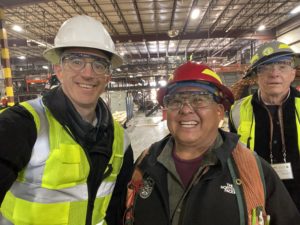 During the first snow of the season, the Guild partnered with the Council of State Foresters, US Forest Service, and others to host the Ponderosa Pine Utilization Summit in Flagstaff, Arizona. Over 120 experts from forest industry, research, land management, non-governmental organizations, utilities, and other sectors worked together on November 18 and 19th to identify key barriers, develop practical solutions, explore innovations, and identify the necessary resources to expand ponderosa pine utilization and speed restoration across the West. The agenda first focused on careful description of the challenges and then dug into actionable solutions.
Ponderosa pine forests are a cornerstone of resilient western landscapes, historically maintained by frequent, low-intensity fires which create open, drought-tolerant stands. A century of fire suppression and changes in land use have increased forest density, fuel loads, and the risk of high-severity wildfire. At the same time, utilization of ponderosa pine for timber and other forest products has declined, leaving limited markets for small-diameter and low-value material. The combination of a loss of milling infrastructure, and lack of viable markets threatens slow active forest management, increasing the risk of high-severity wildfire to both communities and landscapes.
Key challenges identified at the Summit included inconsistent timber supply due to regulatory complexity and litigation, limited markets and secondary infrastructure for low-value material, high transportation costs, and workforce recruitment and retention barriers. Promising solutions include long-term planning in NEPA-ready landscapes, stacking funding across sources, distributed and co-located wood processing facilities, conversion of residuals into value-added products, investment incentives for infrastructure, and collaborative workforce development strategies.
With the challenge clear, participants shifted to solutions. Lead Facilitator for the Summit and Guild member Karen Hardigg said “What was most exciting for me was learning how others are tackling the same issues in completely different places. Being in a room with industry, agencies, researchers, and practitioners from across the West helped us see what’s possible and offered actions people can take home and apply.”
Summit participants shared examples from across the range of ponderosa pine where collaboration among land managers and businesses within a region or woodshed, including partners who might have been overlooked in the past, helped make wood supply more consistent. For example, Tribes, utilities, and non-industrial private landowners can provide wood as a complement to large acreages like the National Forests.
High transportation costs and dispersed mills often make ponderosa pine utilization economically challenging. Participants discussed the benefit of co-locating processing facilities into a “wood campus” that could reduce transportation costs and create efficiencies by operators sharing infrastructure. Another recurring theme was that secondary processing capacity is foundational to the success of mills. For example, John Galvan who works for Jemez Pueblo’s Department of Natural Resources and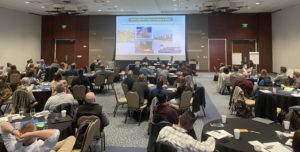 serves on the Guild’s Board of Directors shared the success at Walatowa Timber Industries’ Mill (as described in the latest issue of Forest Steward).
To overcome the persistent challenge of limited markets for low-value and small diameter wood, targeted incentives such as tax credits, accelerated depreciation, or infrastructure sighting support, could encourage investment in biomass and other secondary processing facilities. Participants noted the opportunities for mass timber and cross-laminated timber, particularly as a way of providing affordable housing. The Summit highlighted innovative new products with potential for wide adoption, and hence increased demand for ponderosa pine.
The need for dependable workforce wove throughout the Summit. Gaps in forestry, logging, trucking, and mill work surfaced in the discussions. Participants shared successful approaches to recruiting and retaining workers. A more detailed report focused on actions to advance ponderosa pine utilization and restoration efforts will be available in the new year.