
Empowering the Resilient Community of WNC through Chainsaw Safety and Wildfire Preparedness: Guild Workshops Build Skills, Confidence, and Community Connections in Western NC
Written by Mackenzie Alexander
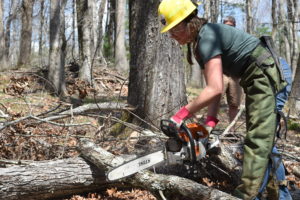
Boone, NC photo taken by: Alice Ashburn
In the wake of Hurricane Helene’s devastating impact on Western North Carolina in September 2024, the Forest Stewards Guild stepped in to support community resilience by offering hands-on training in chainsaw safety and wildfire home protection. This past spring, the Guild hosted three beginner-level chainsaw workshops that blended technical instruction with community-building and empowerment.
The workshops were held in Boone, Creston, and Marshall in Western North Carolina. In Creston, the Guild partnered with Rebuild Hope, the Creston Volunteer Fire Department, NC State University Extension, and the Skills Academy for Women (SAW) to train twenty-three local landowners, most of whom were directly affected by storm damage. Participants rotated through stations focused on equipment safety and wildfire preparedness, which included how to assess fire risk around homes and properties impacted by downed trees and debris.
The Guild again collaborated with SAW in Marshall alongside the Marshall Relief Alliance, NC State University Extension, and EcoForesters to offer a workshop that welcomed members of the LGBTQ+ community. Seventeen participants spent the day learning chainsaw maintenance, operation, and safety in a welcoming, inclusive setting. The workshop wrapped up with a session on fire risk assessment, connecting practical skills with broader strategies for protecting homes and landscapes from future wildfire threats.
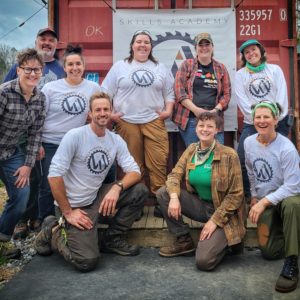
Marshall, NC group photos of instructors and facilitators. Taken by: Dillon Hopper
In Boone, the Guild partnered with Blue Ridge Women in Agriculture, NC State University Extension, Appalachian State University, and the Southern Blue Ridge Prescribed Burn Association to instruct fifteen local women in chainsaw safety and handling. These ladies had a hands-on experience and walked away with smiling faces and all ten fingers and toes!
The strength of instruction and thoughtful planning was the key to these successful workshops. Participants appreciated the instructors’ expertise and approachable, patient teaching styles. The balance of tools, safety gear, and hands-on time created an ideal environment for learning. Everyone had access to what they needed, from access to saws to plenty of time to ask questions and build confidence.
These trainings empowered participants to step outside their comfort zones and take a more active role in stewarding their land. Many folks shared that they felt more capable and confident operating equipment and making safety decisions on their properties.
Beyond the sawdust and safety tips, the workshops also sparked new energy and connections. Engaging with partners and stakeholders through these events helped strengthen existing relationships and opened the door to broader collaborations beyond chainsaw trainings. These types of collaborative workshops are about more than just chainsaws and wildfire mitigation—they’re about building inclusive, resilient communities where women and other historically underrepresented groups feel equipped and empowered to care for their land and each other.