
Growing the Forest Workforce: Building Local Capacity in Appalachia
Written by Chris Defiore
Although rural regions often host the highest concentrations of public and private forest land, they typically lack the sustainable workforce necessary for active management and stewardship. How do we address this foundational problem in forest conservation?
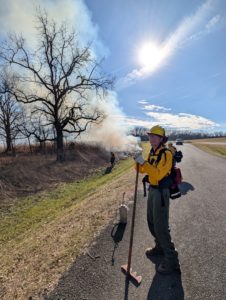 The Guild has partnered with The Nature Conservancy (TNC) in the heart of Central Appalachia in Southwest Virginia to co-pilot the new Forest Stewards Apprenticeship (FSA) Program in response to this challenge. FSA in Southwest Virginia (FSA-SWVA) creates full-time, apprenticeships for local residents to gain in-depth, hands-on forest conservation experience and professional training. The program started in 2025 runs for one year from June to May. In 2025, the Guild also launched an FSA crew in Maine with the Penobscot Nation with additional crews planned in the coming years.
FSA-SWVA apprentices complete a wide range of forest health and improvement projects. These include invasive species management in the newly formed Clinch River State Park and rare ecosystem restoration at Cleveland Barrens Natural Area Preserve with Virginia’s Department of Conservation & Recreation(VA-DCR), as well as urban park development with Clinch River Soil & Conservation District, and forest improvement for enhanced timber quality and wildlife habitat with The Nature Conservancy. In addition, apprentices spend the year engaged in trainings provided by the Guild, TNC, and VA-DCR while also earning industry-standard professional certifications in Wilderness First Aid, Chainsaw Operation, Wildland Firefighter Type II, Pesticide Application, Sustainable Harvesting and Professional Logging, and drone operation. Participants also receive in-depth Appalachian tree identification and GIS training, essential skills for professionals working in forests.
There is an endless amount of conservation and active management work to be done, and very little capacity to do it. TNC forest manager Tal Jacobs notes that “Closing this gap is critical for maintaining resilient and productive forests on our landscape. The Forest Stewards Apprenticeship has provided an immediate boost of activity, but more importantly an investment for building out the robust local workforce that forest managers rely on.” The FSA-SWVA program helps complete critical on-the-ground work while simultaneously developing a local workforce for the future. As one Southwest Virginia apprentice shared, “Moving forward, I’m more motivated than ever to pursue a career in environmental restoration and preservation. I want to keep learning about ecological balance, and the role humans can play in either damaging or restoring it.”
Additionally, despite growing demand for forest conservation professionals, it can be difficult for local residents to break into the field when there are limited opportunities to access industry training or to gain the experience required for many jobs. Many conservation and forest management projects require workers who are trained to make complex, high-stakes decisions within the highly biodiverse Appalachian forest ecosystems, decisions that will shape the long-term health and productivity of these forests. Developing this level of judgment takes significant time and guided, hands-on practice to develop. As apprentice Walker Trent explains, “I’ve really enjoyed working on crop tree release projects with the crew. This is where we select trees that we want to promote growth, and others we want to cull. We’ve all been working on our winter tree identification skills, which takes a lot of practice.”
The FSA-SWVA program is designed to benefit the Southwest Virginia area far beyond a single program year. It prepares a new generation of local forestry professionals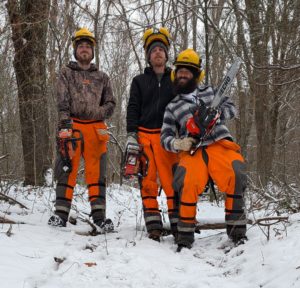 to become ecologically responsible stewards of their region while strengthening the regional land stewardship economy as eco-tourism demand continues to grow. Apprentice Ryan Salyers shares,
“One big change I’ve noticed in St. Paul, VA over my lifetime is how the town has shifted from being mostly a coal community to focusing more on tourism and outdoor recreation. When I was younger, a lot of families around here still depended on mining, but now you see people coming in to visit places like the Clinch River… it’s helped bring more life and jobs to the area, especially for younger folks who don’t want to move away to find work. The environment has also benefited from the cleanup of the river and the push for eco-tourism has made the area a lot prettier and healthier… Working with the Guild ties into that because we’re all about keeping that growth sustainable and making sure locals have a part in it. I think it’s made people around here more proud of where they’re from.”
Note from the editor: Watch for a video release this spring that tells part of the story of the pilot year of FSA-SWVA on the Guild’s YouTube channel!