Burning at Black Lake 2025

November 18, 2025

Written by Maya Hilty 

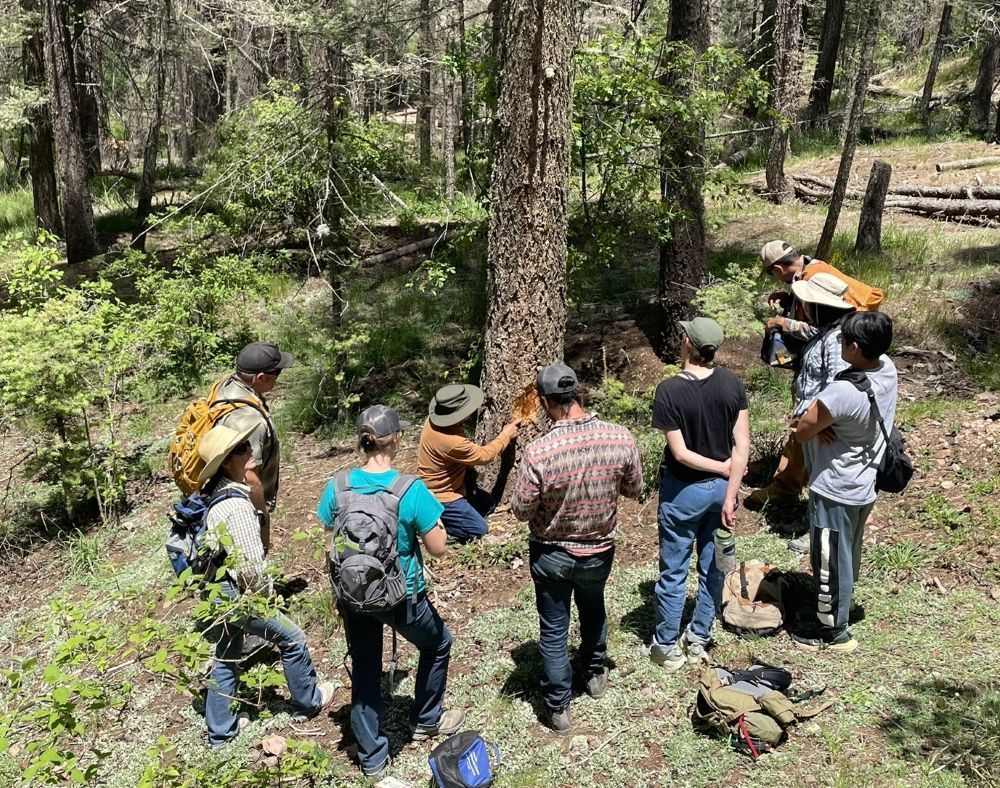
I value being a part of the AHAL team for many reasons, including the opportunities to leave the office for the forest and contribute to landscape-scale resilience to severe wildfires in our state. While I still have much to learn, my first few prescribed fires have also been a great learning experience to help demystify prescribed burns – how they work, who implements them, and why.   

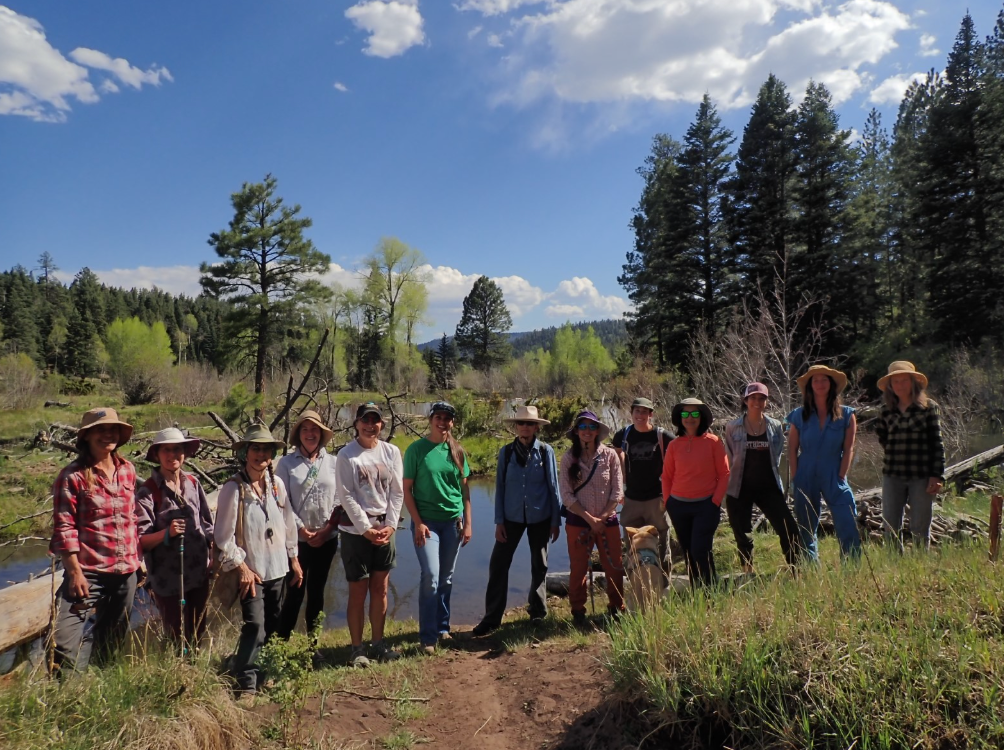
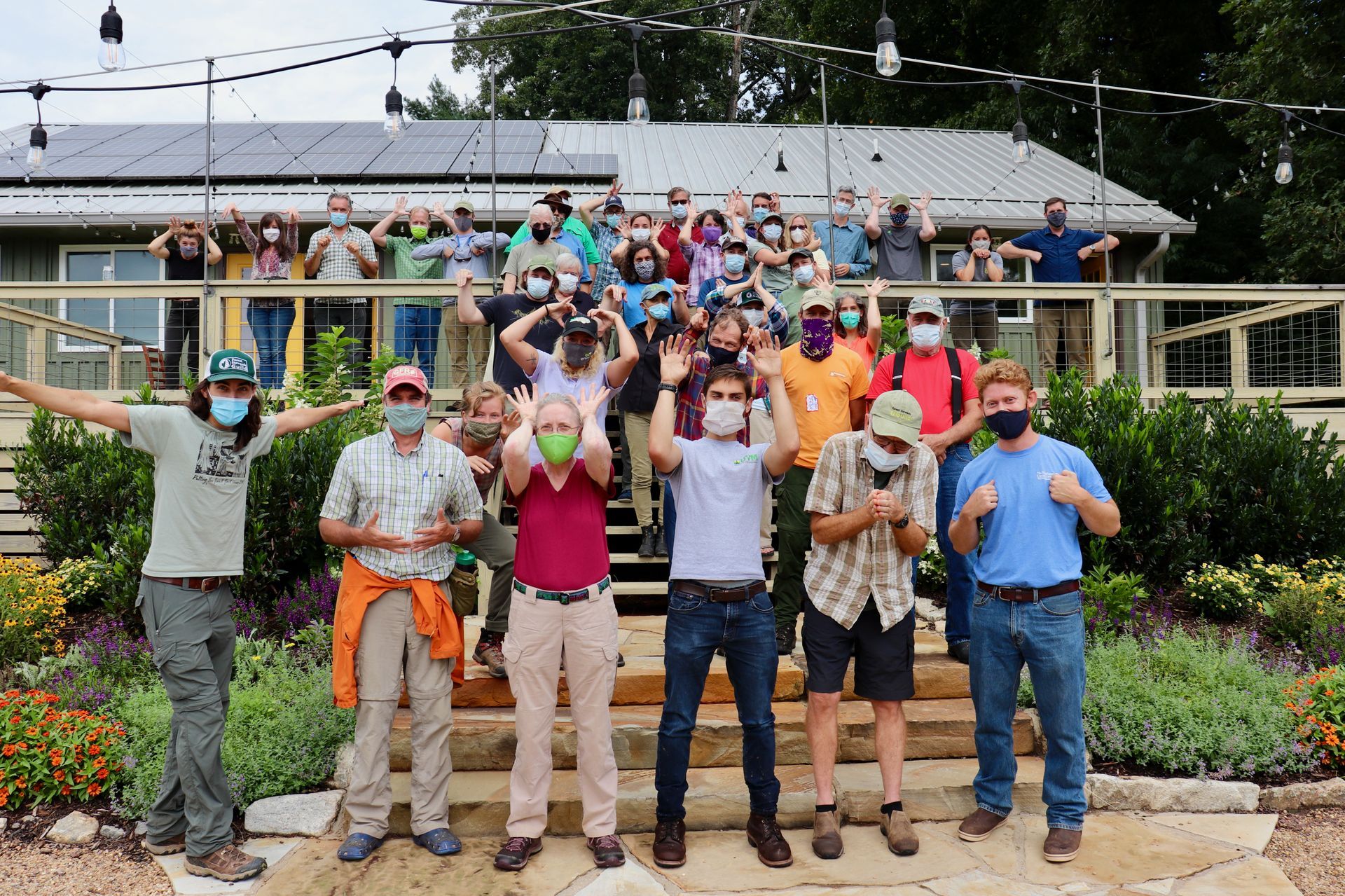
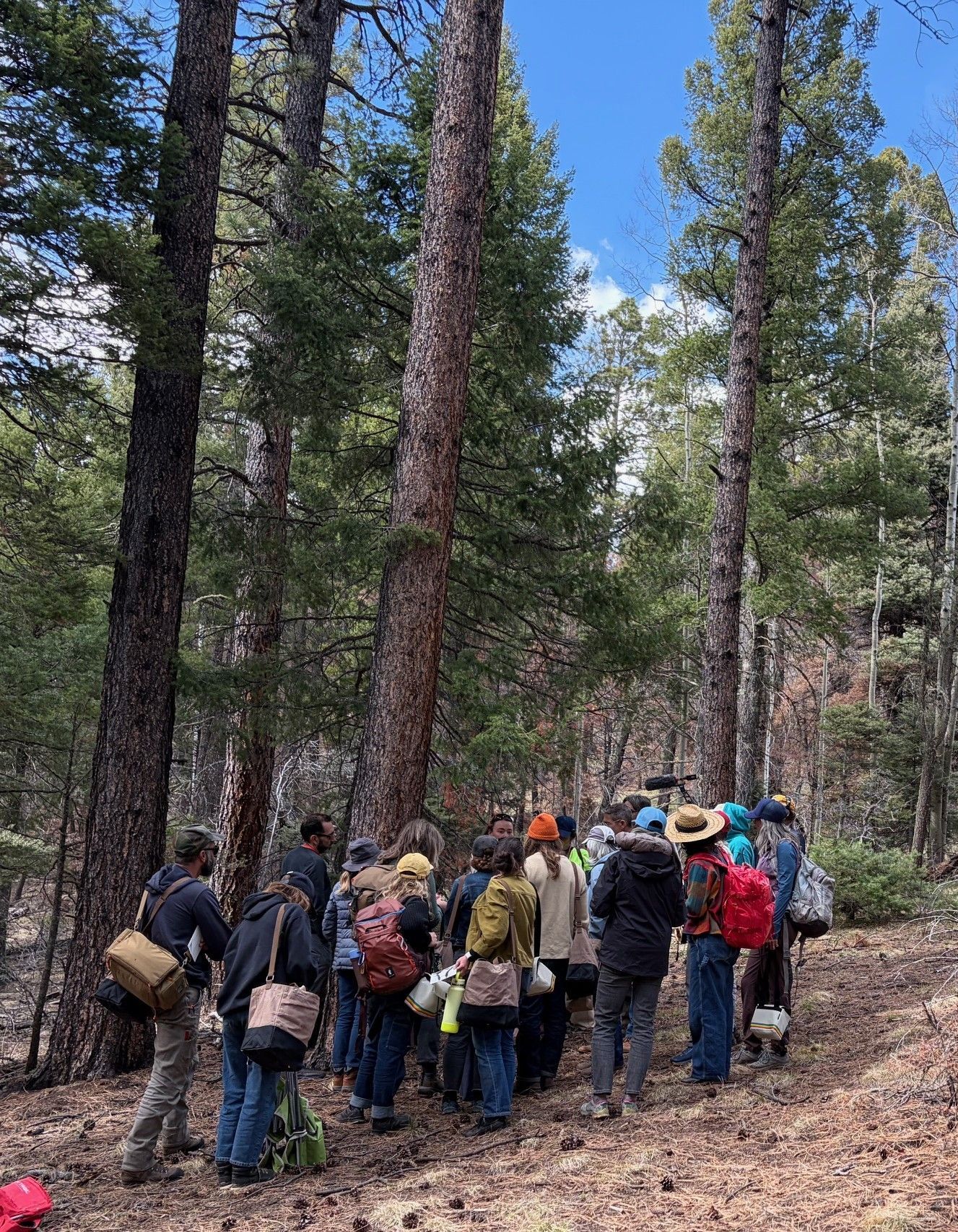
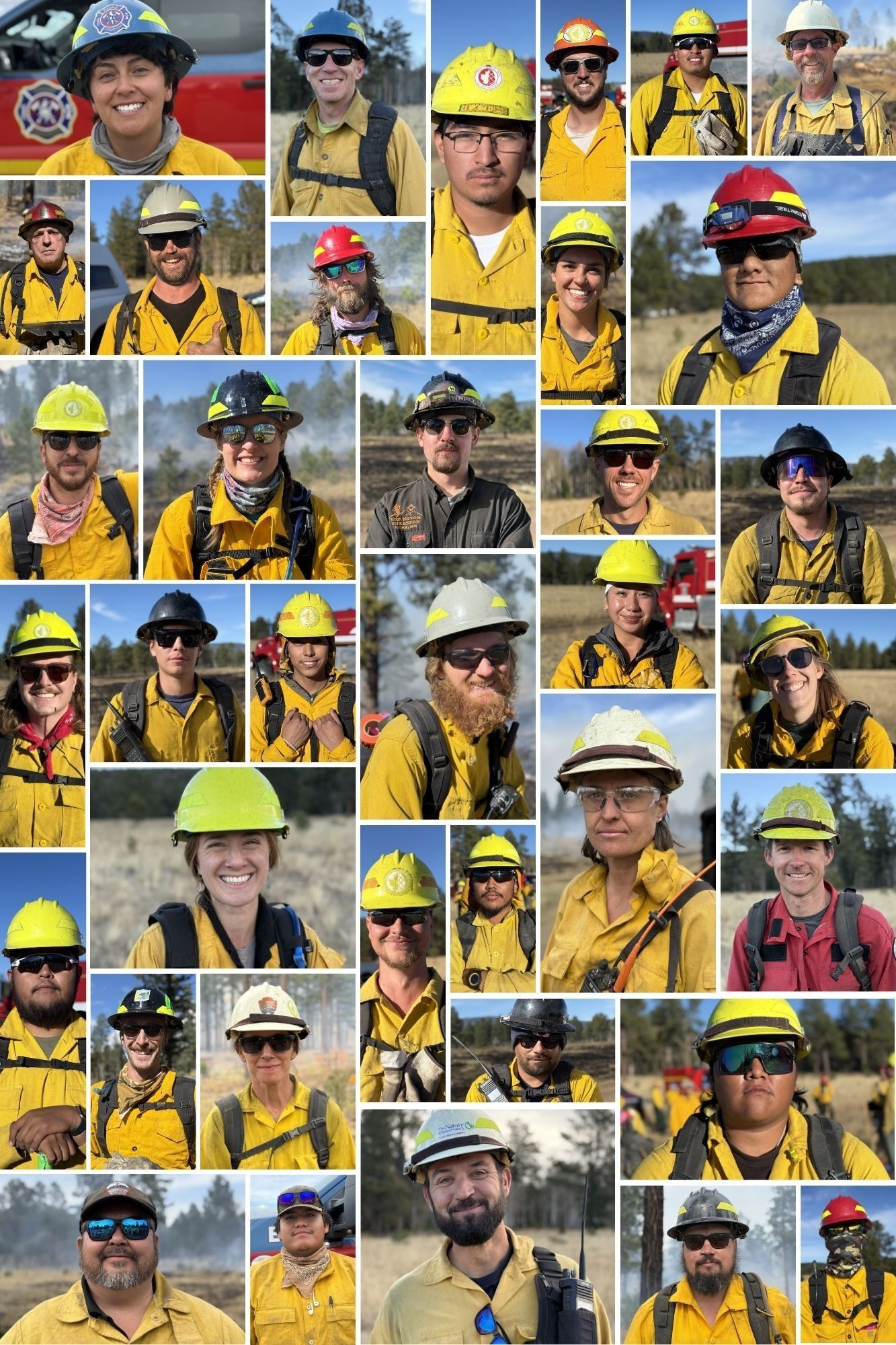
Regarding who’s burning in New Mexico, the Black Lake Rx was a unique amalgamation of diverse groups. The burn occurred on public land owned by the New Mexico State Land Office and was bossed by The Nature Conservancy, but the roughly 50 people who took part also came from the Forest Stewards Guild, the Guild’s youth crews, Angel Fire Fire Department, Picuris Pueblo, Highlands University, the New Mexico Forest and Watershed Restoration Institute, Philmont Scout Ranch, New Mexico Forestry Division and Moreno Valley Fire Department.

By some miracle (read: a lot of relationship-building and logistical planning by my colleagues at the Guild), all of those people managed to assemble in Black Lake for a week of work – despite heavy rains delaying the burn for weeks after our initial target window.   

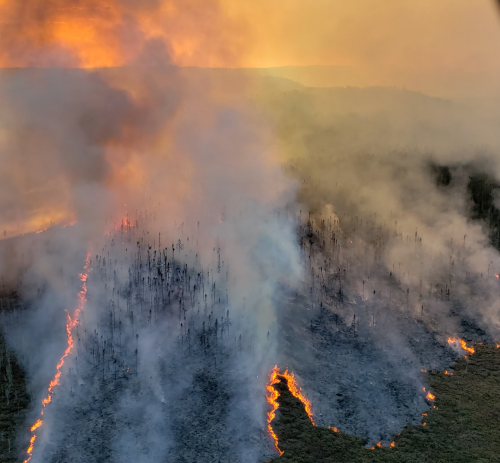
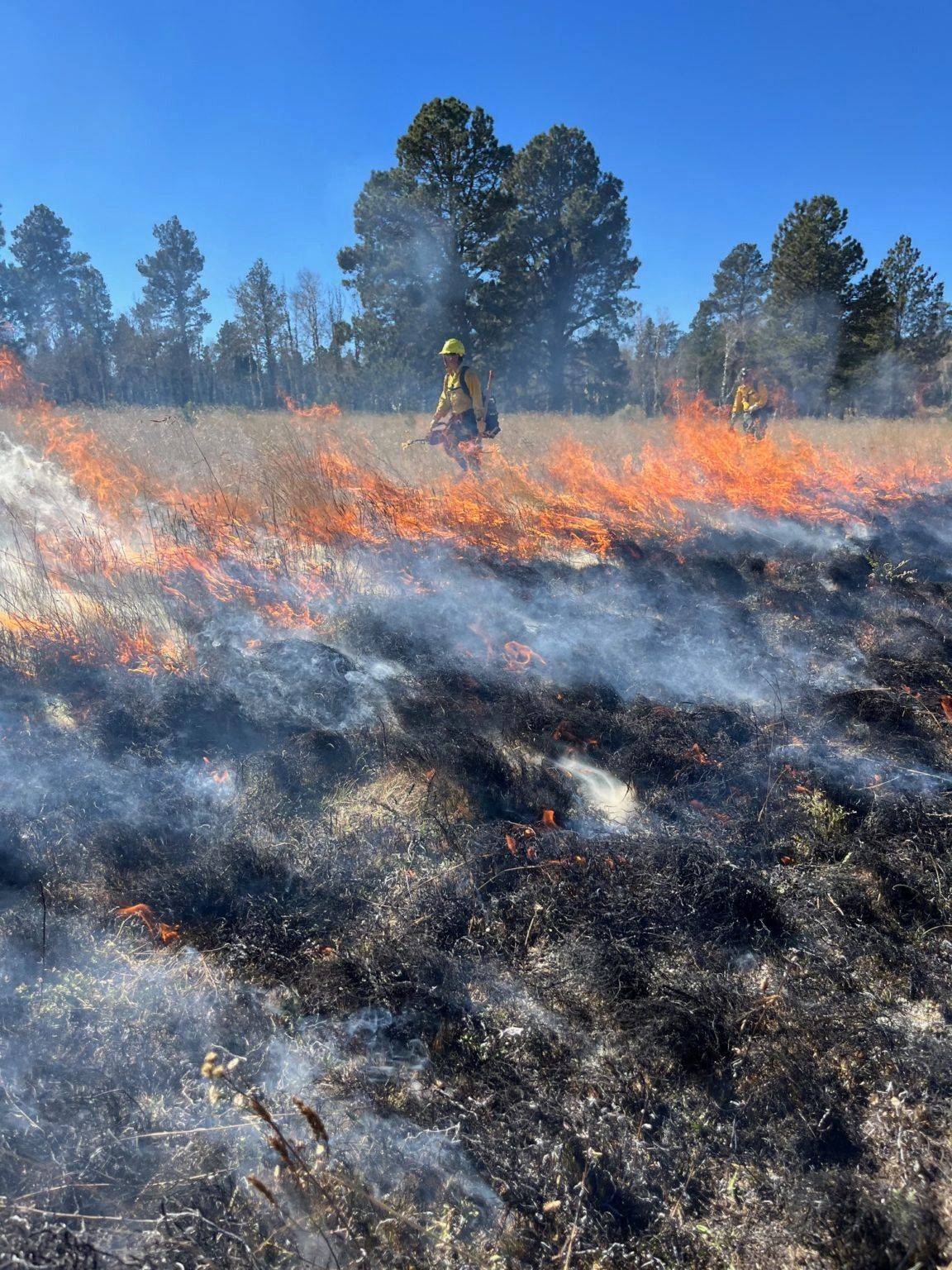
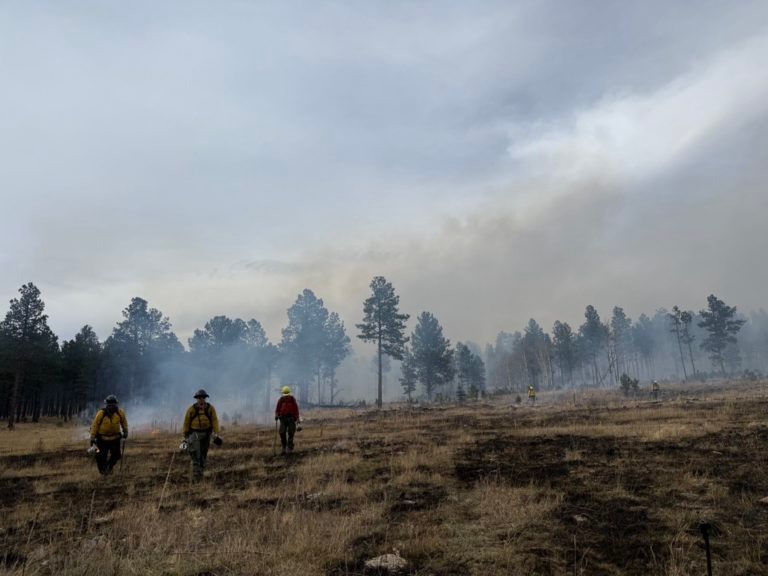
In a nutshell, after an afternoon of getting to know each other and the area we’d burn, we ignited both the perimeter and the interior of unit with handheld drip torches for two days, and spent the final days securing the edges of the unit – aided by an overnight rainstorm – by putting out stumps near the edge and moving any heavy fuels further interior.   

Overall, the burn went smoothly and achieved the ecological objectives, such as consuming ground fuels and some saplings with limited mature tree mortality – alone, a success. On top of that, this burn provided an opportunity for many people like me with little to no experience in fire to participate in and learn from the process of bringing beneficial fire back to the landscape.

At work in Santa Fe, I often encounter people with a lot of fear around prescribed fire. A man once denounced them to me as   just creepy.   It’s not a sentiment I’d blame anyone for given how rarely people see good fire at work, but I can attest that isn’t at all how I felt on the fireline at Black Lake. Watching fire meander through grasses, pine needles, shrubs, loads of downed logs, and pockets of tree regeneration, I instead found myself reflecting on the feeling of being a part of the natural rhythm of the landscape. 

For me, being on prescribed burns has been a step towards relearning how to work with and appreciate fire in our forests. I hope projects similar to the Black Lake Rx can continue opening the door into the fire world for even more people in the future.   

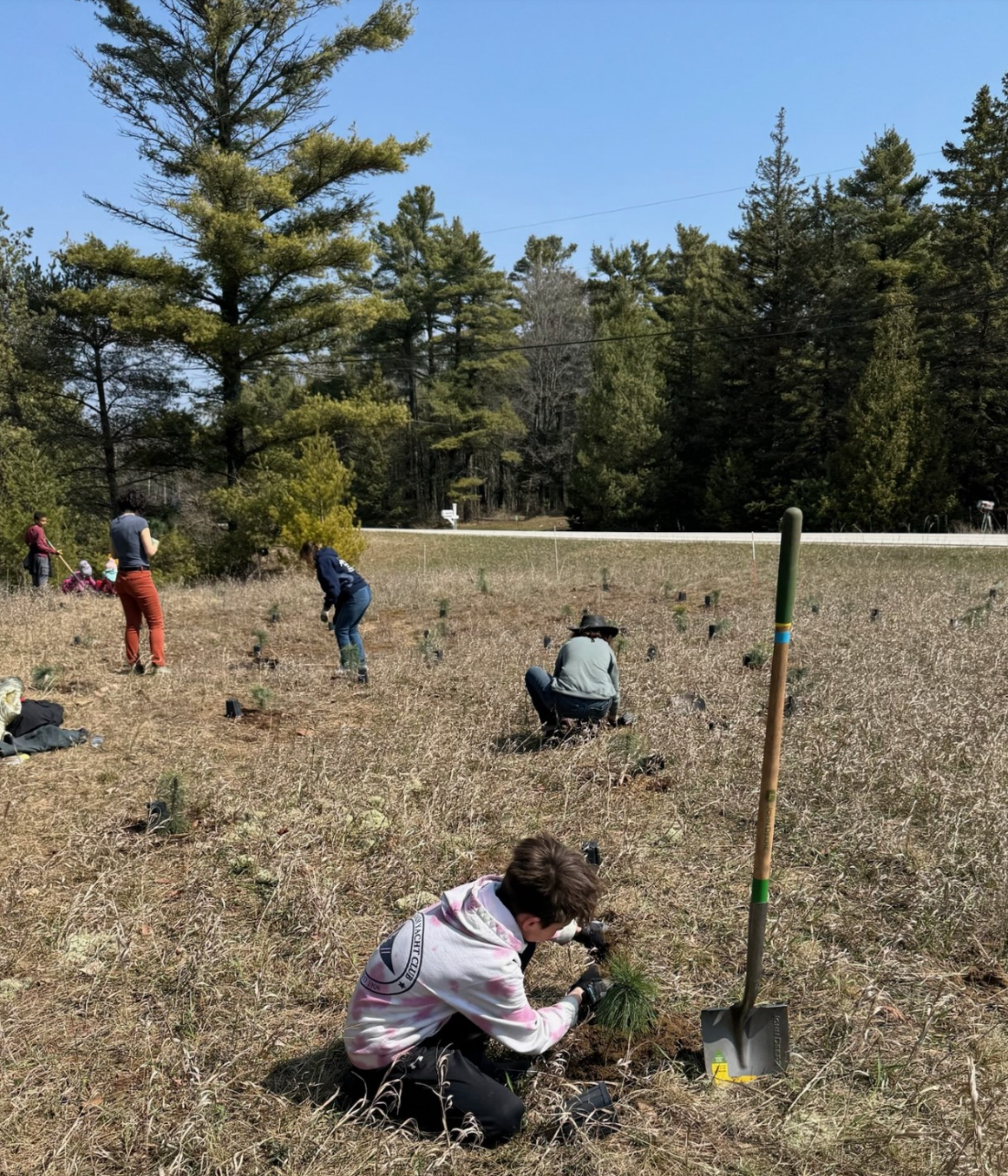
In late October, months of work by many other people landed me in a mountain meadow near Black Lake, New Mexico, stuffing my pack and pants pockets with everything I’d need for the day: Food, water, sunscreen, a few layers, some PPE, a radio, a lighter. 

It would be the first day of ignitions on a 370-acre collaborative prescribed broadcast burn organized in part by the Forest Stewards Guild – and only the second burn of my early career in ecological forestry with the Guild.   

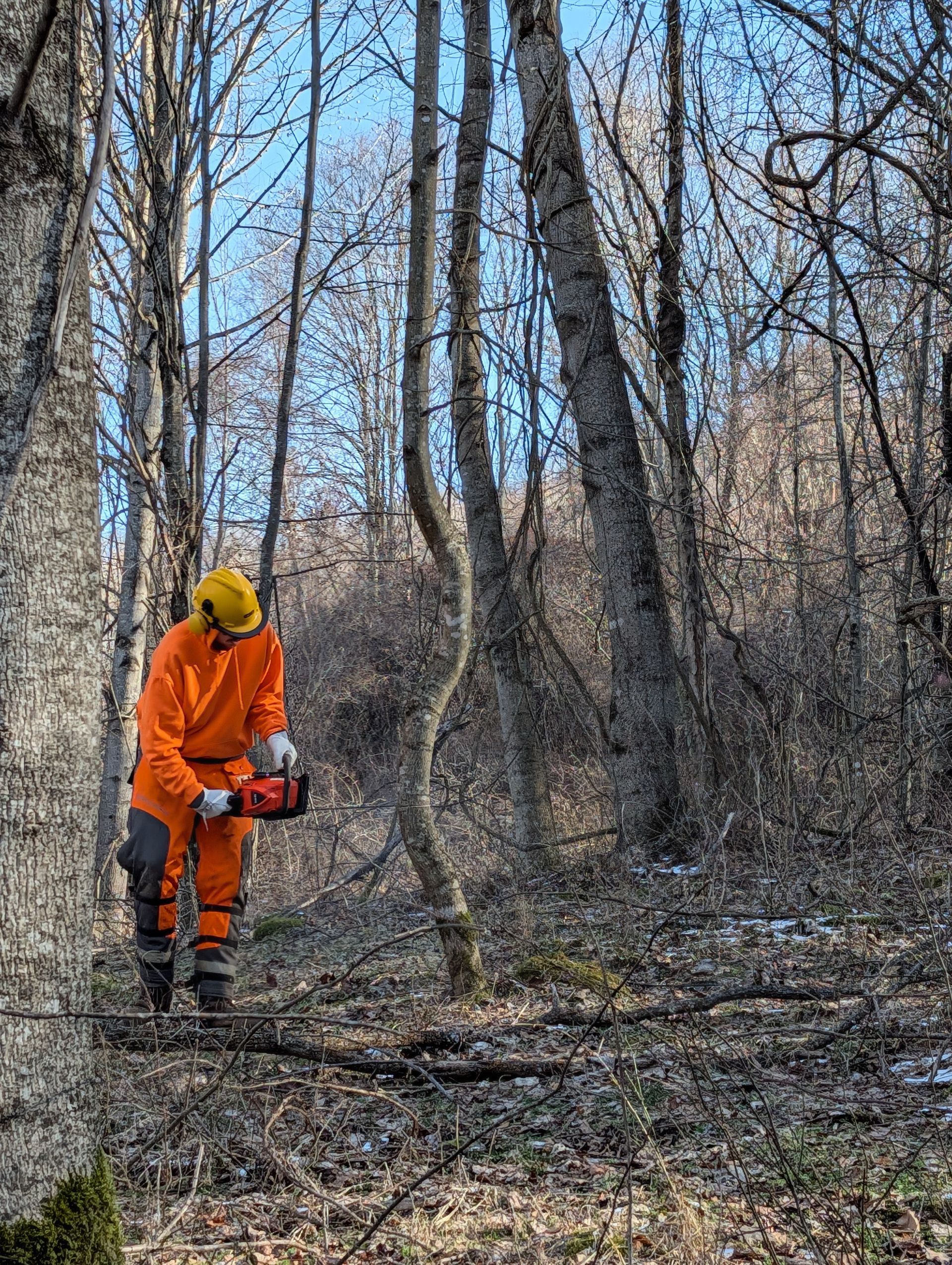
Day to day, I work in the Santa Fe area promoting homeowner wildfire preparedness. During the fall and winter, however, I’m lucky to be one of  a dozen  Guild staff with wildland firefighting training who  are called on to support prescribed burns across New Mexico through the Guild and The Nature Conservancy’s All-Hands All-Lands (AHAL) prescribed fire network.   

Recent Posts

By Daisy Smith June 3, 2026
Written by Ryan Salyers
By Daisy Smith June 2, 2026
Written by Billy Coffey, SWVA Crew Leader
By Daisy Smith May 14, 2026
Written by Zander Evans
By Daisy Smith May 14, 2026
Written by Zander Evans
May 14, 2026
A science inspired art show in Taos, NM Written by Cody Dems
By Aidan Juhl April 16, 2026
Written by Colleen Robinson
April 14, 2026
Written by Shannon Maes
April 14, 2026
In September 2025, the Guild launched a three-person Forest Stewards Apprenticeship (FSA) crew to work with the Penobscot Nation’s Department of Natural Resources (PN DNR). Over the course of their six-month season, apprentices Agenor Duhon, Gabe Stewart, and Jacob Baker shared a season of learning, collaboration, and hands-on stewardship of Penobscot Tribal lands.
April 14, 2026
This week, I stepped into the role of crew leader. We worked a full 40-hour week, splitting our time between Clifton Farms and a prescribed burn operation. On the first day in the field, we completed hack-and-squirt treatments on trees that had been marked the previous week. For the remainder of the week, we focused on marking trees for future hack-and-squirt work, maintaining a steady pace and ensuring accuracy in our selections.
April 7, 2026
As Guild members, our practice is fundamentally grounded in field observation. We know intuitively that forests are dynamic, living communities. Yet, for decades, the high-level systems used to value our work, specifically the carbon accounting ledgers tied to international frameworks like the Paris Agreement, have treated forests as static, quantifiable blocks of land. In a recent commentary published in One Earth, I argue that these legacy measurement, reporting, and verification (MRV) frameworks are failing. Ledger accounting relies on crude land-use delineations and outdated technology, effectively penalizing the natural, seasonal flux of the ecosystems we manage every day. By forcing landscapes into rigid “forest” versus “non-forest” binaries, such legacy systems miss the complex reality on the ground. But a major shift is underway.
Show More