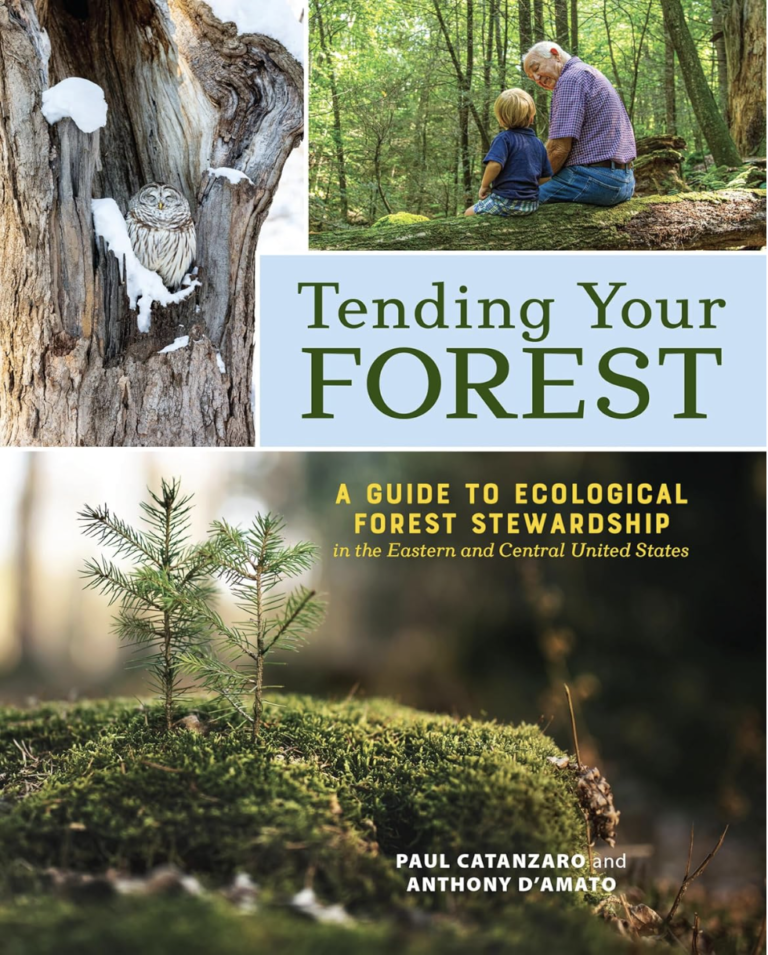
Tending Your Forest Offers Landowners Actionable Guidance and Invaluable Advice

January 6, 2026

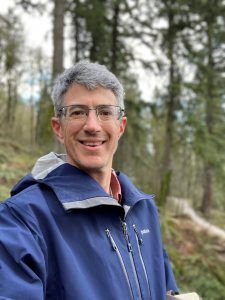
Written by Ami Kane 

I joined the Guild staff back in August and while I arrived to the team with a strong background in nonprofit management and philanthropy, I am a novice to the world of forestry. My passion for trees brought me to this mission, but I knew I’d have so much knowledge to build about stewardship, ecological forestry, sustainable practices, etc., to truly grasp the value that the Guild offers our forests.     

When it was brought to me that an advanced copy of Paul Catanzaro and Anthony D’Amato’s new book,    Tending Your Forest,   was made available to the Guild, I was excited for the opportunity to review it. I dove into this read knowing that I would learn a ton, but I hadn’t anticipated how engaging the read would be, especially as someone who doesn’t directly own a plot of land to steward.   

Whatever anxieties I had about how its content might be over my head or its focus irrelevant to my life were quickly assuaged as I dug in. Catanzaro and D’Amato’s style balances zooming into technical details when those are relevant, while keeping an eye on a big picture, and flexible philosophy that educates and empowers but doesn’t shame landowners who may not know where to start. They build connections between individual choices in the short run, to a long-term stewardship mentality, which requires an eye to forecasting impact on the next generation, or even better, seven generations down the line, as Indigenous stewards teach.   

My favorite thing about the book is how its layout is structured so that it meets many different reader needs and learning styles. It has long-form details for those who learn through in-depth reading, alongside pop-out boxes of practical, hands-on “field guide” style activities those who need to experience to learn will enjoy. These activities encourage landowners to put their boots on and get out there to analyze their land’s current state, their personal goals, and what key questions to ask themselves. The suggested activities will also enable landowners to discover or refine their stewardship goals and select the best strategies and concrete next steps needed to implement and reach them.   

I love to read when flying, so I had planned to check out Tending Your Forest  when I was in transit between my adult home in Austin, TX and a recent visit to my home of origin in the suburbs of Indianapolis, IN. The geographic focus of    Tending Your Forest   is the northeast quadrant of the US which spans from Maine to Minnesota, with Indiana right in its heart. I hadn’t intentionally planned to use the knowledge I gained when I arrived, but I found that I couldn’t help but talk about the book. Discussions were especially relevant with my in-laws who Town a small wooded piece of land they plan to keep wooded in an area of rapid new development. Some of the tips and activities Catanzaro and D’Amato shared came up more than once during my visit and they are excited to explore them further.   

For any landowners who may have an interest in ecological forestry in particular but who may feel intimidated about where to start,  Tending Your Forest should be a go-to resource. Catanzaro and D’Amato have lovingly and expertly crafted a book that is part how-to guide, part science text, part sage advice, part practical hands-on workbook, and part goal-setting and strategy.  Tending Your Forest    will officially be released on March 17 and can be found at your favorite bookseller!   

Recent Posts

By Daisy Smith May 14, 2026
Written by Zander Evans
By Daisy Smith May 14, 2026
Written by Zander Evans
May 14, 2026
A science inspired art show in Taos, NM Written by Cody Dems
By Aidan Juhl April 16, 2026
Written by Colleen Robinson
April 14, 2026
Written by Shannon Maes
April 14, 2026
In September 2025, the Guild launched a three-person Forest Stewards Apprenticeship (FSA) crew to work with the Penobscot Nation’s Department of Natural Resources (PN DNR). Over the course of their six-month season, apprentices Agenor Duhon, Gabe Stewart, and Jacob Baker shared a season of learning, collaboration, and hands-on stewardship of Penobscot Tribal lands.
April 14, 2026
This week, I stepped into the role of crew leader. We worked a full 40-hour week, splitting our time between Clifton Farms and a prescribed burn operation. On the first day in the field, we completed hack-and-squirt treatments on trees that had been marked the previous week. For the remainder of the week, we focused on marking trees for future hack-and-squirt work, maintaining a steady pace and ensuring accuracy in our selections.
April 7, 2026
As Guild members, our practice is fundamentally grounded in field observation. We know intuitively that forests are dynamic, living communities. Yet, for decades, the high-level systems used to value our work, specifically the carbon accounting ledgers tied to international frameworks like the Paris Agreement, have treated forests as static, quantifiable blocks of land. In a recent commentary published in One Earth, I argue that these legacy measurement, reporting, and verification (MRV) frameworks are failing. Ledger accounting relies on crude land-use delineations and outdated technology, effectively penalizing the natural, seasonal flux of the ecosystems we manage every day. By forcing landscapes into rigid “forest” versus “non-forest” binaries, such legacy systems miss the complex reality on the ground. But a major shift is underway.
March 18, 2026
Women have always been a part of forestry. Historically, women often helped guide family decisions about when to cut, which trees to save, and how best to steward their land for the next generation. Historical accounts from the Southern Appalachians describe women’s roles in decisions about timber harvesting and prioritizing long-term forest health. These often-uncredited contributions are even reflected in Aldo Leopold’s A Sand County Almanac (1949), in which describes his stewardship philosophy informed not only by his professional experience, but by shared responsibility, where the perspectives of his wife and daughters played an important role.
March 18, 2026
Although rural regions often host the highest concentrations of public and private forest land, they typically lack the sustainable workforce necessary for active management and stewardship. How do we address this foundational problem in forest conservation?
Show More