Supporting the Next Generation of Forest Stewards in the Northeast

November 14, 2024

Written by Rachel Swanwick

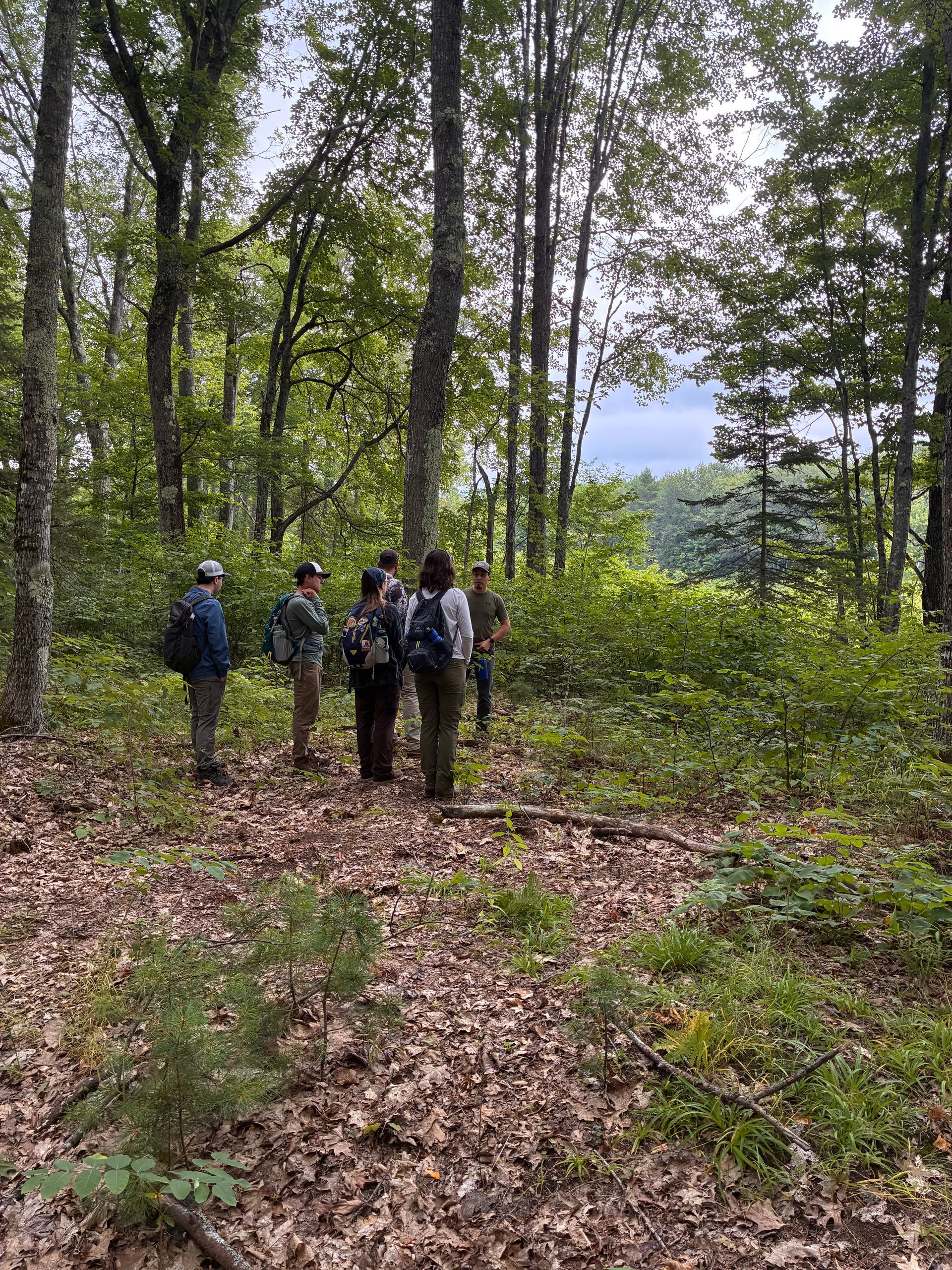
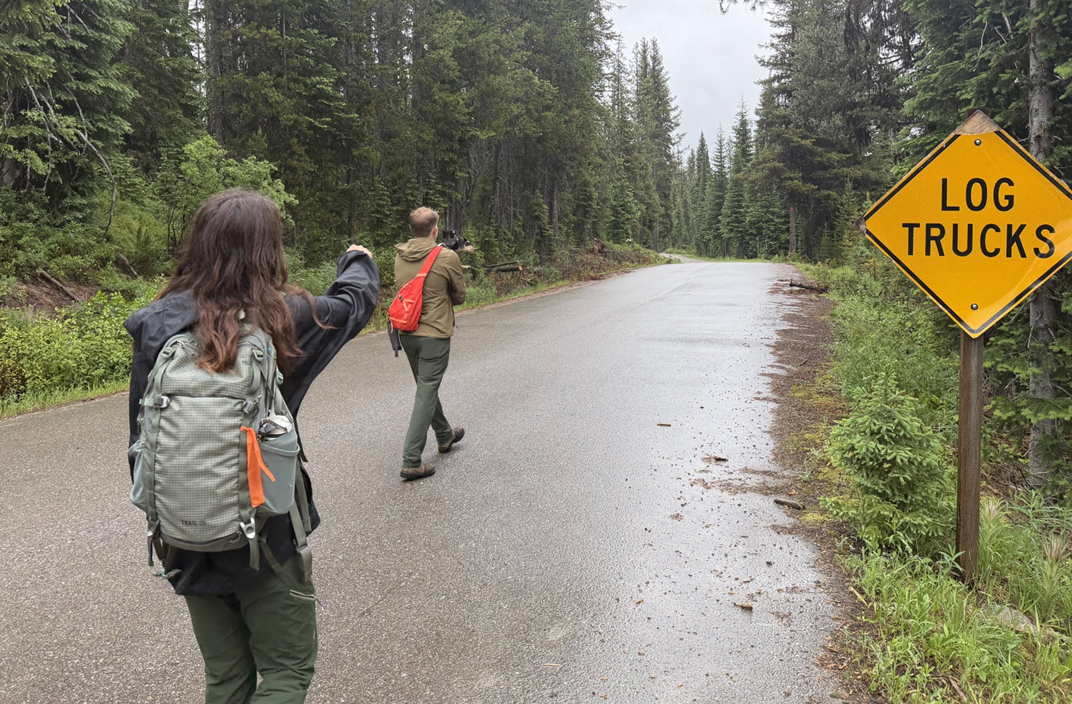
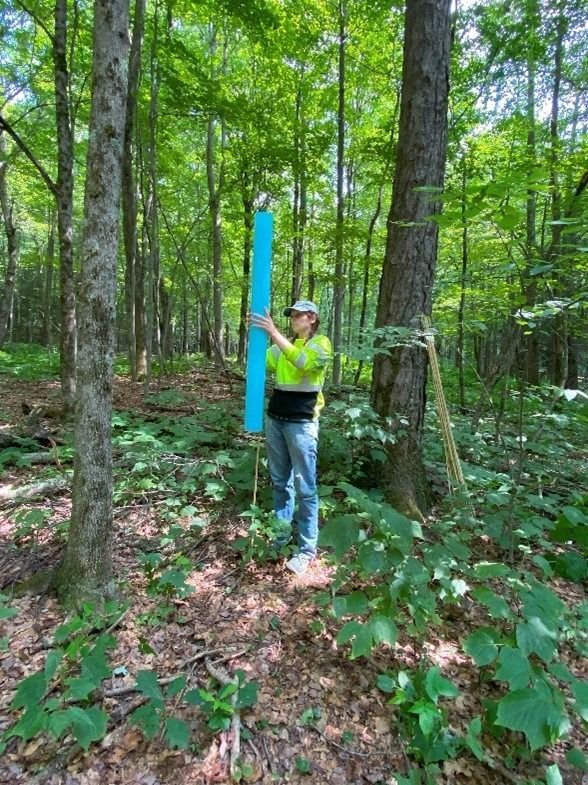
This past summer, the Forest Stewards Guild partnered with The Nature Conservancy to launch the NextGen Forest Program – a summer apprenticeship that supports training and professional development for the next generation of forest stewards. Three college-aged forestry apprentices participated in the program launch. Myra Traves, Phoebe Weinberg, and Miles Plitt spent their summer traveling throughout Vermont and Massachusetts treating invasive plants (e.g., glossy buckthorn and Japanese barberry) and protecting native saplings from deer browse.

Through workforce development and training, the program promotes healthy forest regeneration and climate-smart forestry practices. It maximizes carbon storing capacity across our local forests. The NextGen team, mentored by Otis Wood from Long View Forest, planned and implemented forestry treatments across 10 privately owned family forest properties that spanned over 50 acres of forest lands.

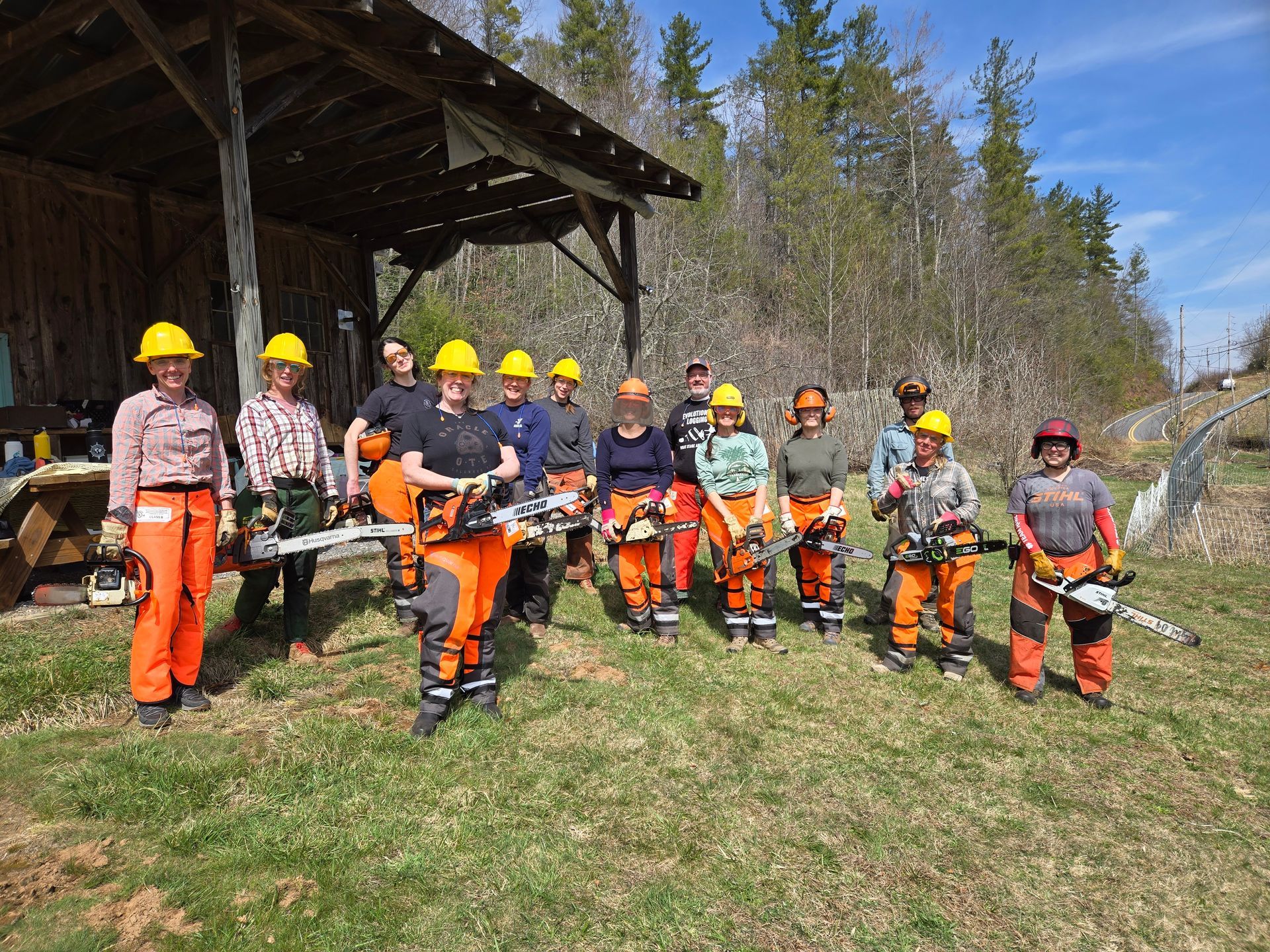
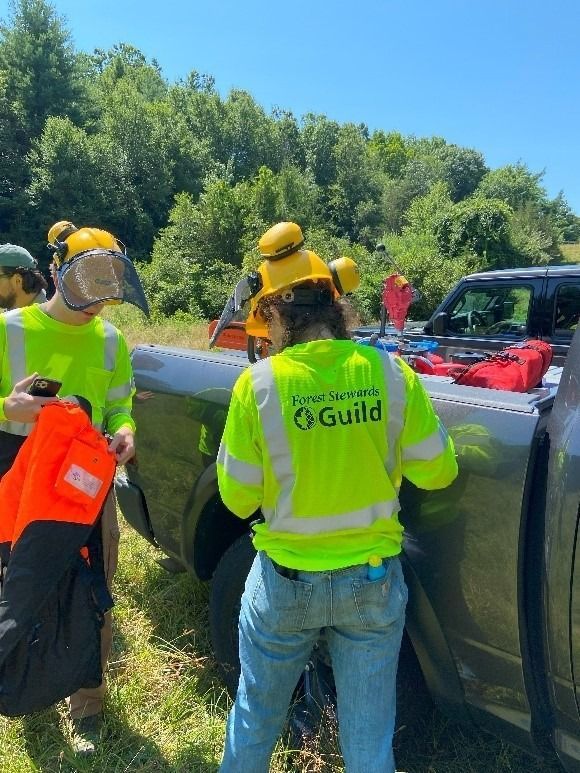
To gain the skills needed to lead these forest resiliency practices in the Northeast, the apprentices participated in training for chainsaw safety through Game of Logging, received their herbicide applicator licenses, and participated in a drone training day. NextGen apprentice Phoebe Weinberg shared,

“I’ve never used herbicide or a backpack sprayer, never driven a big truck. And I had done a little bit of chain sawing before this, but never really on my own…So that was cool, and I felt safe doing that. Bits and pieces of everything were new. “ 

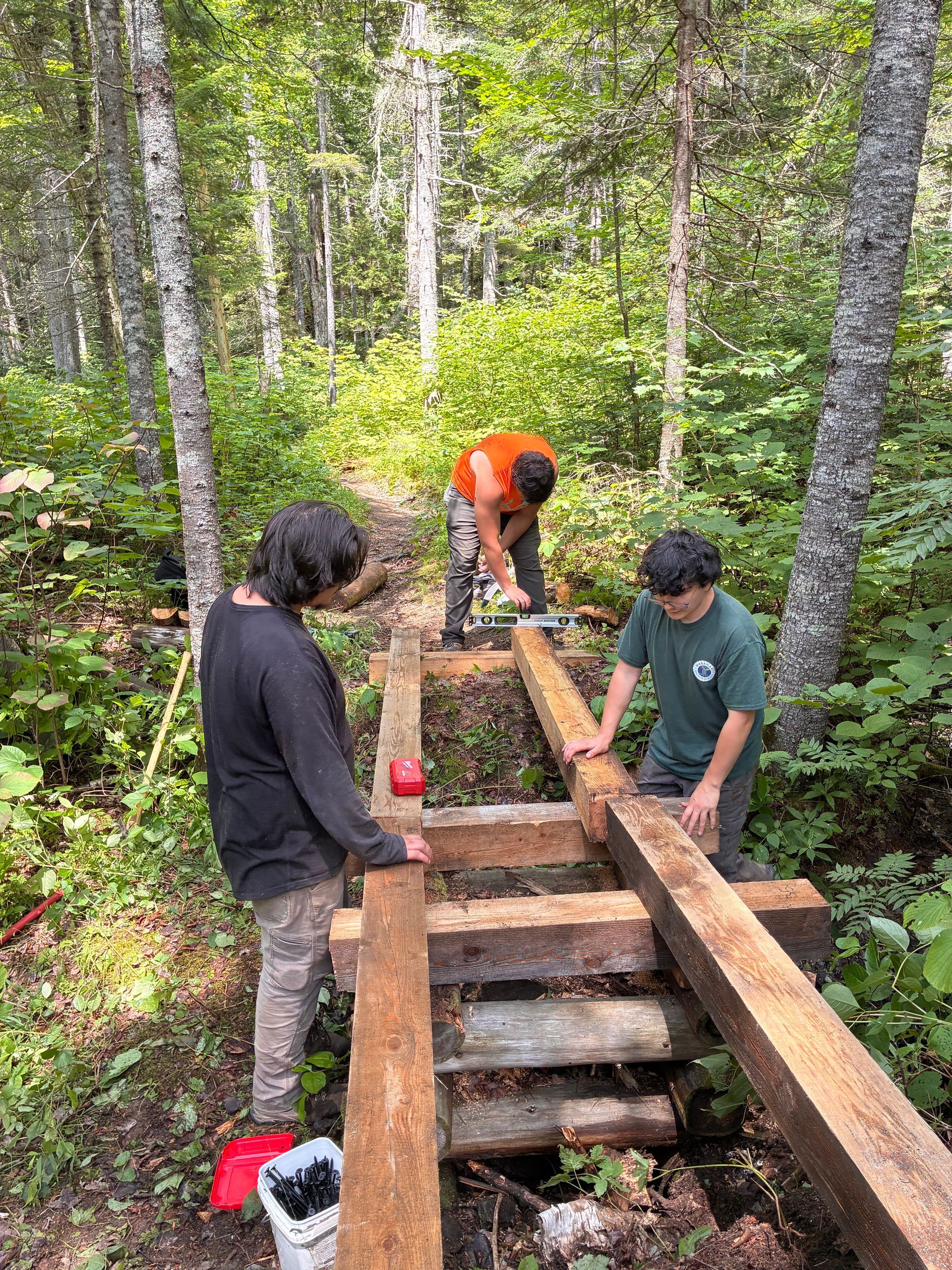
With this experience, the NextGen apprentices each wrote treatment plans, led workdays implementing their suggested treatments, and made suggestions for future management that can be used to guide the participating family forest owners in the future. These diverse hands-on experiences helped the NextGen team build their confidence and skills needed to pursue a career in forestry or natural resource management and “could really give you some direction,” Miles Plitt, NextGen apprentice says. “I feel like doing this I got a full experience of what working [in the forestry field] would be like, the conditions and environments I’d be working in…it certainly served its purpose. I learned what it would be like and now I have a more solid feeling as to what I want to do career wise.” In the Northeastern region of the Guild, staff are hoping to expand the successes of this program and continue supporting teams of forestry apprentices for years to come.

Recent Posts

By Daisy Smith May 14, 2026
Written by Zander Evans
By Daisy Smith May 14, 2026
Written by Zander Evans
May 14, 2026
A science inspired art show in Taos, NM Written by Cody Dems
By Aidan Juhl April 16, 2026
Written by Colleen Robinson
April 14, 2026
Written by Shannon Maes
April 14, 2026
In September 2025, the Guild launched a three-person Forest Stewards Apprenticeship (FSA) crew to work with the Penobscot Nation’s Department of Natural Resources (PN DNR). Over the course of their six-month season, apprentices Agenor Duhon, Gabe Stewart, and Jacob Baker shared a season of learning, collaboration, and hands-on stewardship of Penobscot Tribal lands.
April 14, 2026
This week, I stepped into the role of crew leader. We worked a full 40-hour week, splitting our time between Clifton Farms and a prescribed burn operation. On the first day in the field, we completed hack-and-squirt treatments on trees that had been marked the previous week. For the remainder of the week, we focused on marking trees for future hack-and-squirt work, maintaining a steady pace and ensuring accuracy in our selections.
April 7, 2026
As Guild members, our practice is fundamentally grounded in field observation. We know intuitively that forests are dynamic, living communities. Yet, for decades, the high-level systems used to value our work, specifically the carbon accounting ledgers tied to international frameworks like the Paris Agreement, have treated forests as static, quantifiable blocks of land. In a recent commentary published in One Earth, I argue that these legacy measurement, reporting, and verification (MRV) frameworks are failing. Ledger accounting relies on crude land-use delineations and outdated technology, effectively penalizing the natural, seasonal flux of the ecosystems we manage every day. By forcing landscapes into rigid “forest” versus “non-forest” binaries, such legacy systems miss the complex reality on the ground. But a major shift is underway.
March 18, 2026
Women have always been a part of forestry. Historically, women often helped guide family decisions about when to cut, which trees to save, and how best to steward their land for the next generation. Historical accounts from the Southern Appalachians describe women’s roles in decisions about timber harvesting and prioritizing long-term forest health. These often-uncredited contributions are even reflected in Aldo Leopold’s A Sand County Almanac (1949), in which describes his stewardship philosophy informed not only by his professional experience, but by shared responsibility, where the perspectives of his wife and daughters played an important role.
March 18, 2026
Although rural regions often host the highest concentrations of public and private forest land, they typically lack the sustainable workforce necessary for active management and stewardship. How do we address this foundational problem in forest conservation?
Show More